





Introduction to Email Authentication Email deliverability is essential for businesses and organizations that rely on email communications to engage with their audience, conduct transactions, and share critical information. However, increasing…
Introduction to Email Authentication
Email deliverability is essential for businesses and organizations that rely on email communications to engage with their audience, conduct transactions, and share critical information. However, increasing spam, phishing, and spoofing attacks have challenged the reliability of email as a communication channel. To mitigate these risks and improve the chances of legitimate emails reaching recipients’ inboxes, email authentication protocols such as SPF, DKIM, and DMARC play a vital role.
This article explores how these protocols function individually and collectively to protect senders, recipients, and improve email deliverability.
What is SPF (Sender Policy Framework)?
How SPF Works
SPF (Sender Policy Framework) is an email authentication method designed to detect and prevent sender address forgery. It allows domain owners to specify which mail servers are authorized to send emails on behalf of their domain. This specification is published as an SPF record in the Domain Name System (DNS).
When an inbound mail server receives an email claiming to be from a particular domain, it checks the SPF record of that domain. The receiving server compares the sending server’s IP address against the authorized IP addresses listed in the SPF record. Depending on the result, the email is either accepted, flagged as suspicious, or rejected outright.
Benefits of Implementing SPF
SPF helps prevent email spoofing—a common technique used by spammers and phishers to impersonate legitimate senders. By verifying that the sending server is authorized, SPF reduces the likelihood that fraudulent emails reach recipients. This builds trust in the sender’s domain and enhances the reputation and deliverability of legitimate emails. Additionally, many popular email providers use SPF results as part of their spam filtering algorithms.
What is DKIM (DomainKeys Identified Mail)?
How DKIM Works
DKIM (DomainKeys Identified Mail) provides a way to ensure the integrity and authenticity of email content. Unlike SPF, which validates the sending server, DKIM uses cryptographic signatures to verify that the message has not been altered in transit and genuinely originates from the claimed domain.
When an email is sent, the sender’s mail server generates a digital signature using a private key and adds it to the email header. The public key is published in the sender’s DNS records. The recipient’s server retrieves the public key and verifies the signature against the message contents. If the signature matches, the email is considered authentic.
Advantages of Using DKIM
DKIM ensures message integrity and reduces the risk of tampering or impersonation during transit. It allows recipients to trust that the email content is unmodified and legitimately sent from the owner of the signing domain. This is particularly important for organizations that send transactional emails, newsletters, or any sensitive information. DKIM signatures also contribute to improved email deliverability by signaling legitimacy to receiving servers.
What is DMARC (Domain-based Message Authentication, Reporting & Conformance)?
How DMARC Builds on SPF and DKIM
DMARC addresses some of the limitations of SPF and DKIM by providing a unified policy framework that ties both authentication methods to the domain visible in the “From” header—the one users see. This alignment requirement ensures that the authentication checks align with the sender’s domain, preventing attackers from using third-party domains for spoofing.
DMARC publishes a DNS record specifying how recipient servers should handle messages that fail SPF or DKIM checks and provides a reporting mechanism that sends feedback to the domain owner about authentication results.
Key DMARC Policies and Their Impact
DMARC supports three primary policies:
- none: The domain owner monitors messages without affecting delivery. Useful during initial setup to gather data.
- quarantine: Messages failing authentication are marked as suspicious and typically sent to spam or junk folders.
- reject: Messages failing authentication are outright rejected by the receiving server.
Choosing the right policy depends on the domain owner’s readiness and confidence in their email authentication setup. Implementing “reject” provides the strongest protection against spoofing but requires careful testing.
Benefits of DMARC for Email Deliverability and Security
DMARC improves email deliverability by helping receiving servers distinguish legitimate emails from phishing and spam. It also provides valuable visibility into how domain emails are handled across the ecosystem, enabling proactive security improvements. By publishing a DMARC policy, domain owners signal a commitment to email security, which can enhance trust and brand reputation.
How SPF, DKIM, and DMARC Work Together
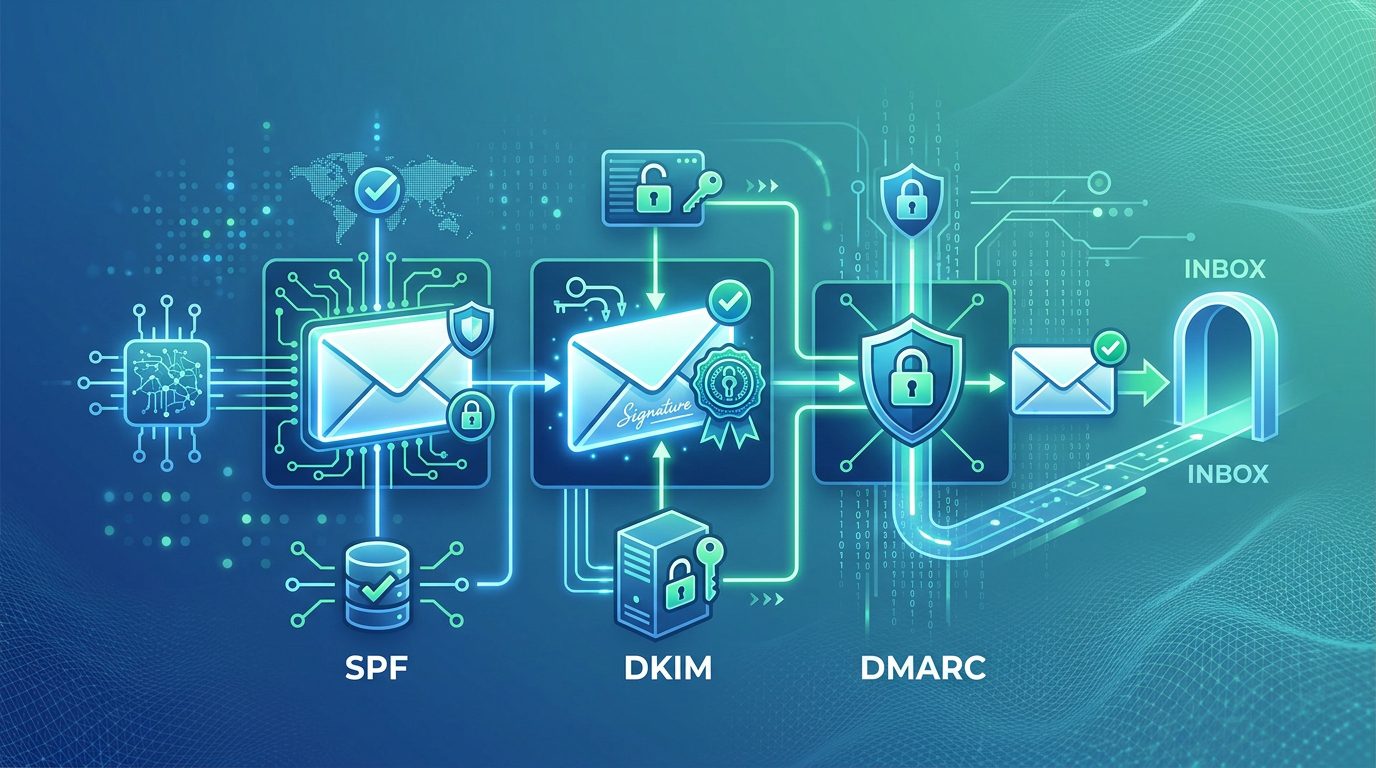
SPF and DKIM individually protect different aspects of email authentication—sender authorization and message integrity, respectively. However, neither protocol alone fully protects against spoofing in all cases. DMARC ties these protocols together under a unified policy and enforces alignment between the sender domain and the domain authenticated by SPF and DKIM.
When an email is received, the recipient’s server checks SPF and DKIM results. DMARC then verifies that either SPF or DKIM passes with domain alignment. If successful according to the published policy, the email is accepted as legitimate. This combination provides a strong defense against spoofing, phishing, and unauthorized use of the domain.
Setting Up SPF, DKIM, and DMARC Records
Best Practices for Configuration
Correctly configuring SPF, DKIM, and DMARC records is crucial to maximizing their benefits and ensuring email deliverability. Recommended best practices include:
- SPF: Specify only authorized sending IP addresses or include third-party services as necessary. Keep the SPF record under the 10 DNS lookup limit to avoid failures.
- DKIM: Generate strong cryptographic keys (preferably 2048-bit) and rotate keys periodically. Ensure that outgoing email servers sign all messages consistently.
- DMARC: Start with a “none” policy to collect reports and monitor existing email flows. Gradually move to “quarantine” or “reject” once confident in authentication performance.
- Publish all records accurately in DNS and test them using available verification tools before going live.
Common Challenges and How to Troubleshoot Them
Some common issues encountered during implementation include:
- SPF: Exceeding DNS lookup limits or not including third-party service IPs results in SPF failures. Regular audits of authorized senders help mitigate this.
- DKIM: Incorrect key placement in DNS or inconsistent signing causes verification failures. Testing with sample emails and record validators is essential.
- DMARC: Misconfigured policies that are too strict too early may cause legitimate emails to be rejected; starting conservatively helps. Interpreting DMARC reports requires understanding complex failure reasons.
Using standardized tools and consulting up-to-date documentation mitigates many configuration errors.
Monitoring and Maintaining Email Authentication
Using DMARC Reports to Improve Deliverability
DMARC provides aggregated and forensic reports from recipient servers, detailing authentication results for emails sent under a domain. Regularly reviewing these reports allows domain owners to:
- Identify unauthorized use or abuse of the domain for email spoofing.
- Detect legitimate sending sources that are not properly authenticated.
- Adjust SPF, DKIM, and DMARC records based on actual email flows.
- Gradually enforce stricter DMARC policies to increase protection.
Effective use of DMARC reports improves ongoing email deliverability by proactively resolving authentication issues.
Tools to Help Manage Authentication Protocols
Several tools assist in the configuration, testing, and monitoring of SPF, DKIM, and DMARC:
- SPF Record Checkers: Verify SPF syntax and authorized IPs, and identify DNS lookup count.
- DKIM Validators: Test DKIM signatures on sent emails and check DNS key records.
- DMARC Analyzers: Aggregate and visualize DMARC reports, often providing actionable insights and alerts.
- Email Deliverability Platforms: Many commercial services integrate these checks and offer consolidated dashboards.
Leveraging these tools simplifies management and helps maintain robust email authentication setups.
Conclusion: Enhancing Email Deliverability with SPF, DKIM, and DMARC
SPF, DKIM, and DMARC are complementary email authentication protocols that collectively improve email security, fighting spoofing and phishing attacks while increasing the likelihood that legitimate emails reach their intended recipients’ inboxes. SPF authorizes sending servers, DKIM ensures message integrity through digital signatures, and DMARC enforces consistent domain alignment and provides detailed reporting to monitor authentication performance.
Implementing these protocols following best practices—and using the insights from DMARC reports—enables organizations to protect their brand reputation, enhance email trustworthiness, and optimize deliverability. Though setup and maintenance require careful attention to detail and ongoing monitoring, the benefits in terms of improved security and reliable email communication make SPF, DKIM, and DMARC indispensable components of modern email infrastructure.
Share: